



Overview
For years, cameras have been treated as passive observers recording events for later review. That model no longer holds. In a world driven by real-time decision-making, enterprises cannot afford systems that only “see” without understanding.
Key points
Reframing the Role of Video in Enterprise
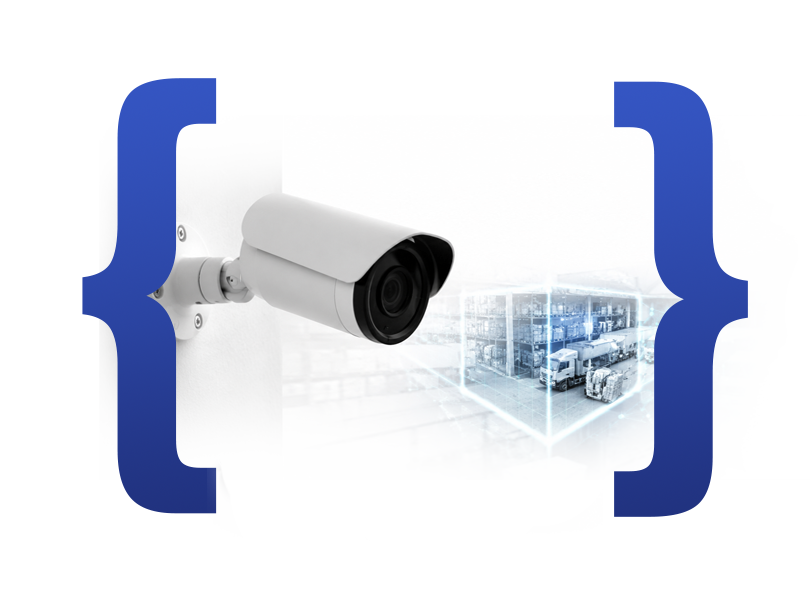
Today, cameras are evolving into intelligent sensors, capable of interpreting environments, detecting patterns, and triggering actions. This shift marks the rise of visual intelligence platforms, where video analytics becomes a foundational layer in enterprise IoT and digital transformation strategies.
The implication is clear: visibility is no longer enough. What matters is interpretable, actionable intelligence at scale.
What Does It Mean to Turn Cameras into Sensors?
Transforming cameras into sensors means enabling them to function like any other IoT data source, continuously capturing, processing, and transmitting structured insights rather than raw footage.
Instead of storing video, modern systems extract metadata such as:
- Object detection (vehicles, people, equipment)
- Behavioral patterns (movement, dwell time, congestion)
- Environmental context (safety violations, anomalies)
This transformation is powered by AI-driven video analytics, edge computing, and integrated data pipelines. The result is a system that doesn’t just record reality, interprets and responds to it in real time.
Why Video Analytics is Central to Enterprise IoT
Traditional IoT relies on structured sensor data; temperature, pressure, location. But these sensors capture only specific, predefined signals.
Video, on the other hand, captures context-rich, unstructured data. When processed through AI, it becomes one of the most powerful inputs in the IoT ecosystem.
Strategic Advantages
- Contextual Intelligence
Unlike single-point sensors, video provides a holistic view of environments, enabling deeper insights. - Reduced Sensor Dependency
A single camera can replace multiple hardware sensors, lowering infrastructure complexity. - Adaptive Insights
AI models can evolve to detect new patterns without requiring physical upgrades. - Cross-Functional Impact
From operations to safety to customer experience, video analytics supports multiple business functions simultaneously.
Industry Applications:
- Smart Logistics and Transportation
Visual intelligence enables real-time vehicle tracking, congestion detection, and automated gate operations reducing idle time and improving throughput. - Manufacturing and Industrial Operations
AI-powered cameras monitor production lines, detect anomalies, and ensure compliance with safety protocols minimizing downtime and risk. - Retail and Customer Experience
Footfall analysis, queue management, and behavior tracking help optimize store layouts and improve conversion rates. - Smart Cities and Public Safety
From traffic optimization to crowd management, visual intelligence platforms enhance urban planning and emergency response. - Mining and Heavy Industries
End-to-end visibility across material movement, weighment, and safety compliance ensures operational efficiency in complex environments.
From Visibility to Autonomous Operations
The true value of visual intelligence platforms lies in their ability to move beyond observation into autonomous decision-making.
Modern systems are increasingly designed as closed-loop ecosystems:
- Detect events in real time
- Analyze patterns using AI models
- Trigger automated workflows
- Continuously learn and optimize
This transition reduces reliance on manual intervention and enables predictive, self-optimizing operations.
PruTech brings deep product engineering expertise in AI-powered video analytics, enabling organizations to transform camera networks into intelligent operational systems. Our solutions are designed not as standalone tools, but as integrated platforms that align with enterprise IoT, automation, and decision-making ecosystems.
What differentiates PruTech is its ability to combine video analytics, IoT integration, and workflow automation into a unified platform, turning insights into immediate, measurable action.
Challenges Leaders Must Address
While the potential is significant, successful adoption requires strategic alignment.
- Data Governance and Privacy
Organizations must ensure ethical AI use, regulatory compliance, and secure data handling. - Integration Complexity
Video analytics must seamlessly integrate with existing enterprise systems to deliver full value. - Scalability and Infrastructure
Balancing edge and cloud deployments are critical for performance and cost optimization. - Change Management
Shifting from reactive monitoring to proactive intelligence requires cultural and operational transformation.
Conclusion
Turning cameras into sensors is not a technology trend, it is a strategic shift in how enterprises perceive and manage operations.
Organizations that embrace visual intelligence platforms gain more than visibility. They gain control, predictability, and the ability to act with precision at scale.
Those that don’t risk operating in blind spots, where inefficiencies grow, risks escalate, and opportunities remain unseen.
FAQs
- What is a visual intelligence platform?
A visual intelligence platform uses AI-powered video analytics to convert video feeds into actionable insights, enabling real-time decision-making and automation. - How is video analytics different from traditional surveillance?
Traditional surveillance records events, while video analytics interprets data, detects patterns, and triggers actions in real time. - Why is video analytics important for IoT?
It adds contextual, high-value data that enhances the capabilities of traditional IoT sensors and enables more comprehensive insights. - Can video analytics be integrated with existing enterprise systems?
Yes, modern platforms are designed to integrate with ERP, IoT, and other enterprise applications for unified operations. - What industries benefit the most from visual intelligence platforms?
Industries such as logistics, manufacturing, retail, mining, and smart cities see significant benefits in efficiency, safety, and decision-making.
PruTech’s AI-powered video analytics solutions help organizations convert existing camera infrastructure into intelligent, action-driven systems. From real-time monitoring to predictive insights, we enable enterprises to move from visibility to control.