


Overview
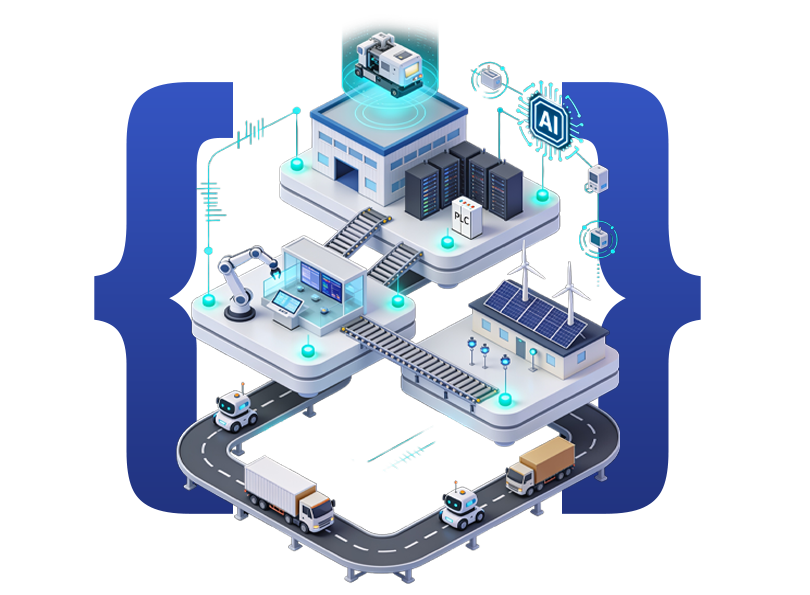
Artificial Intelligence is no longer confined to enterprise dashboards or cloud based analytics. Today, AI is making real time decisions on the plant floor, analyzing sensor data, predicting equipment failures, optimizing production schedules, improving quality inspection, and enabling autonomous operations.
This shift is transforming manufacturing. However, it is also exposing organizations to an entirely new category of cybersecurity and operational risks.
Key points
As Operational Technology (OT) and Information Technology (IT) continue to converge, manufacturers face a critical challenge:
How do you unlock AI driven innovation without compromising operational resilience, safety, and security?
The answer lies in building a secure OT and IT convergence strategy that treats cybersecurity as a business enabler rather than an afterthought.
The Rise of AI Driven Manufacturing
Modern manufacturing environments are becoming highly connected ecosystems where machines, industrial control systems, IoT devices, enterprise applications, cloud platforms, and AI models continuously exchange data.
AI now supports:
- Predictive maintenance
- Computer vision based quality inspection
- Autonomous production optimization
- Digital twins
- Energy optimization
- Industrial robotics
- Supply chain forecasting
- Worker safety monitoring
These capabilities rely on seamless communication between IT systems and OT environments.
Historically, these environments operated independently.
Today, they are deeply interconnected.
This convergence creates tremendous business value but significantly expands the attack surface.
Understanding OT and IT Convergence
Operational Technology includes the systems responsible for monitoring and controlling physical processes, such as:
- PLCs
- SCADA systems
- Industrial Control Systems (ICS)
- Manufacturing Execution Systems (MES)
- Industrial sensors
- Robotics
Information Technology includes enterprise systems such as:
- ERP
- CRM
- Cloud platforms
- Enterprise databases
- AI platforms
- Business applications
OT prioritizes:
- Availability
- Safety
- Reliability
IT prioritizes:
- Confidentiality
- Data integrity
- Scalability
AI depends on both.
It requires operational data from OT while leveraging enterprise infrastructure from IT to generate actionable intelligence.
Why AI Changes the Security Landscape
AI introduces entirely new data flows across manufacturing environments.
Instead of simply collecting information, AI continuously:
- Processes production data
- Connects with enterprise applications
- Accesses cloud platforms
- Integrates with IoT devices
- Learns from operational history
- Makes recommendations or autonomous decisions
Every new connection becomes a potential attack vector.
Without proper governance, AI can unintentionally increase cyber risks across the factory floor.
Common concerns include:
- Expanded Network Exposure
Previously isolated OT environments become connected to cloud services, remote users, vendors, and AI applications.
- Data Integrity Risks
AI models depend on accurate operational data.
Manipulated sensor inputs can produce incorrect predictions and unsafe operational decisions.
- Legacy Infrastructure
Many manufacturing environments still operate equipment designed long before modern cybersecurity standards existed.
These assets often lack authentication, encryption, or patch management capabilities.
- Increased Third Party Connectivity
AI deployments frequently involve cloud providers, analytics platforms, industrial software vendors, and system integrators.
Every integration introduces additional security considerations.
Why Traditional Security Models No Longer Work
Perimeter based security assumes that everything inside the network is trustworthy.
Modern manufacturing no longer fits that model.
Production environments now include:
- Edge AI devices
- Connected robots
- Mobile operators
- Cloud platforms
- Remote maintenance
- Digital twins
- Industrial IoT sensors
Security must evolve from protecting networks to protecting identities, workloads, applications, devices, and data.
Core Principles for Securing OT and IT Convergence
- Adopt Zero Trust Architecture
Zero Trust assumes no device, user, or application should be trusted automatically.
Every interaction must be continuously verified.
For manufacturers, this includes:
- Identity based authentication
- Device verification
- Continuous monitoring
- Least privilege access
- Network segmentation
Zero Trust significantly reduces lateral movement during cyber incidents.
- Segment OT Networks
Not every system should communicate with every device.
Critical production assets should remain isolated from business applications wherever possible.
Network segmentation helps organizations:
- Limit ransomware propagation
- Protect industrial controllers
- Secure production zones
- Reduce operational disruptions
Micro segmentation further strengthens protection by isolating sensitive workloads.
- Secure Industrial IoT Devices
Industrial IoT serves as the foundation of AI powered manufacturing.
Every connected device should include:
- Strong authentication
- Secure firmware
- Encrypted communication
- Device inventory management
- Continuous vulnerability monitoring
Unmanaged devices often become the weakest security link.
- Protect AI Models and Data Pipelines
AI security extends beyond infrastructure.
Organizations must secure:
- Training datasets
- Data pipelines
- Feature stores
- Machine learning models
- Inference environments
- Model updates
Compromised AI models can generate inaccurate operational recommendations that affect safety, productivity, and product quality.
- Implement Continuous Monitoring
Manufacturing environments generate enormous volumes of operational data.
AI powered security analytics can detect:
- Unauthorized device behavior
- Abnormal production activity
- Insider threats
- Network anomalies
- Unexpected process changes
Continuous visibility enables faster incident detection and response.
- Strengthen Identity and Access Management
Access should be controlled across employees, contractors, vendors, machines, and AI applications.
Best practices include:
- Multi factor authentication
- Role based access control
- Privileged access management
- Time limited administrative access
- Continuous identity verification
Identity has become the new security perimeter.
- Build Cyber Resilience
Prevention alone is insufficient.
Manufacturers must prepare for inevitable cyber incidents.
An effective resilience strategy includes:
- Incident response planning
- OT specific disaster recovery
- Secure backups
- Business continuity planning
- Regular cyber exercises
The objective is maintaining production even during cyber events.
The Role of AI in Industrial Cybersecurity
Ironically, AI is becoming one of the strongest cybersecurity tools available to manufacturers.
AI enhances security by enabling:
- Real time anomaly detection
- Behavioral analytics
- Threat intelligence correlation
- Predictive risk analysis
- Automated incident prioritization
- Faster security investigations
Rather than replacing security teams, AI enables them to respond more quickly and accurately.
Governance Is Equally Important
Technology alone cannot secure AI enabled manufacturing.
Organizations need clear governance frameworks covering:
- AI usage policies
- Data ownership
- Compliance requirements
- Model validation
- Vendor risk assessments
- Security audits
- Regulatory alignment
Strong governance ensures AI adoption remains transparent, secure, and accountable.
Business Benefits of Secure OT and IT Convergence
Organizations that prioritize secure convergence achieve measurable business outcomes:
- Reduced production downtime
- Improved operational visibility
- Faster incident response
- Greater asset reliability
- Enhanced worker safety
- Better regulatory compliance
- Stronger customer trust
- Scalable AI adoption
- Increased operational efficiency
Security becomes a catalyst for innovation rather than a constraint.
How PruTech Enables Secure AI Powered Manufacturing
At PruTech, we help manufacturers modernize their operations by securely integrating OT and IT environments with advanced AI, Industrial IoT, cloud, and cybersecurity solutions.
Our expertise includes:
- Industrial IoT implementation
- AI and machine learning solutions
- OT and IT integration
- Cloud modernization
- Data engineering and analytics
- Zero Trust security architecture
- Security monitoring and governance
- Smart manufacturing and Industry 4.0 transformation
By combining deep technology expertise with a security first approach, PruTech enables organizations to accelerate AI adoption while ensuring operational continuity, cyber resilience, and long term business growth.
Conclusion
The convergence of OT and IT is the foundation of modern manufacturing.
A proactive, security first strategy empowers manufacturers to embrace AI with confidence, transforming operational efficiency while safeguarding the systems that keep production running.
Ready to build a secure, AI powered manufacturing ecosystem? Connect with PruTech to accelerate your Industry journey with confidence.