



Overview
The convergence of computer vision, deep learning, and edge computing has fundamentally transformed how we perceive, analyze, and respond to events in physical spaces. As organizations navigate an increasingly complex security landscape while seeking operational efficiencies, three critical technologies have emerged as foundational pillars of intelligent infrastructure: License Plate Recognition (LPR), Behavior Recognition, and Event Detection.
Key points
Cities enterprises and governments are moving beyond basic video surveillance. Cameras no longer just record. They understand, interpret, and respond. License Plate Recognition, Behavior Recognition, and Event Detection form the foundation of modern intelligent vision systems that drive safety, efficiency, compliance and real time decision making.
The Evolution from Passive Video to Intelligent Vision
Traditional video systems were reactive. Footage was reviewed after incidents occurred. Modern AI powered vision systems are proactive. They analyze live video streams, extract meaningful patterns and trigger instant alerts.
This shift is enabled by advances in computer vision, deep learning, edge computing, and scalable cloud architectures. The result is situational awareness at machine speed.
License Plate Recognition: From Simple OCR to Intelligent Transportation Systems
The Evolution of ALPR Technology
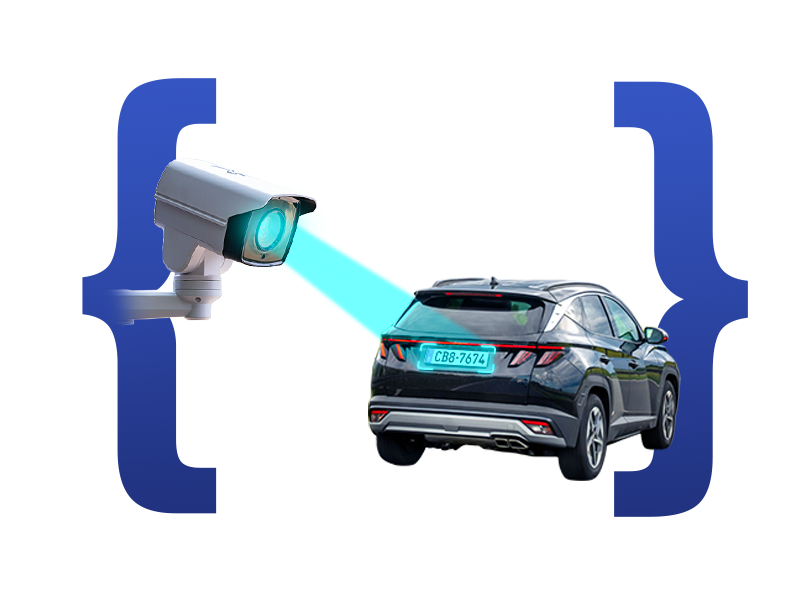
Automatic License Plate Recognition LPR is one of the most mature and widely deployed vision applications. It automatically detects vehicle plates from images or video and converts them into structured searchable data.
Automatic License Plate Recognition has undergone a remarkable transformation from early optical character recognition systems to sophisticated neural network architectures capable of processing plates across varying conditions, angles, and international formats. Modern LPR systems leverage convolutional neural networks (CNNs) combined with recurrent neural networks (RNNs) to achieve recognition accuracy rates exceeding 98% in controlled environments.
How it works
- High resolution cameras capture vehicle images
- AI models locate the license plate region
- Optical character recognition reads plate characters
- The system validates formats and stores results with time and location
Where it delivers value
- Traffic monitoring and congestion management
- Smart parking and automated tolling
- Law enforcement and stolen vehicle detection
- Secure access control for campuses and enterprises
- Fleet and logistics tracking
Distribution centers, ports, and logistics hubs leverage LPR for yard management, automating check-in processes and optimizing loading dock assignments.
Modern LPR systems operate in challenging conditions including low light, high speed traffic, and adverse weather. Accuracy is no longer a differentiator, reliability at scale is.
Behavior Recognition: Decoding Human Activity Through Vision
Behavior recognition represents one of the most computationally intensive and technically challenging domains within computer vision. Unlike static object detection, behavior analysis requires understanding temporal sequences, spatial relationships, and contextual cues that define meaningful human activities. The field has witnessed exponential growth driven by advances in deep learning architectures specifically designed for temporal modeling.
What behavior recognition detects
Retail Analytics:
- Detect anomalous activities
- Unauthorized access to restricted areas
Security and Threat Detection:
- Crowd formation and abnormal movement
- Aggressive actions or physical altercations
- Identifying abandoned objects
- Unsafe driving patterns
Healthcare Monitoring
- Fall detection,
- Wandering prevention
- Activity monitoring
Workplace Safety
- Workplace safety violations
- Compliance with safety protocols
- Signs of worker fatigue or distress
- Entering hazardous zones without authorization
By learning normal behavior baselines AI can flag deviations that indicate risk or inefficiency. This is especially valuable in airports, metros, factories, retail, environments, and public spaces.
Behavior recognition reduces dependency on human monitoring while improving consistency and response time.
Event Detection: Intelligent Response to Complex Scenarios
Event detection extends beyond recognizing individual behaviors to understanding complex, multi-faceted scenarios that unfold over time and space. An event may involve multiple actors, objects, and contextual elements that collectively signify a meaningful occurrence requiring attention or action. The challenge lies in distinguishing between routine activities and significant events, minimizing false positives while maintaining high sensitivity to true events of interest.
Examples of event detection
- Accidents or vehicle breakdowns
- Perimeter breaches
- Fire smoke or sudden congestion
- Abandoned objects
- Slip and fall incidents
Unlike simple motion detection, event detection understands sequences and causality. It connects what is happening with what should be done next.
This capability is critical for emergency response, operational continuity, and risk mitigation.
The Convergence: Integrated Intelligence Ecosystems
The true transformative potential emerges when LPR, behavior recognition, and event detection operate as integrated components of comprehensive intelligence ecosystems. This convergence enables sophisticated scenarios that leverage the complementary strengths of each technology.
Consider a smart parking facility where LPR identifies vehicles entering and exiting, behavior recognition tracks pedestrian flow and identifies potential safety issues such as someone falling, and event detection monitors for unauthorized access to restricted areas or suspicious packages. The integration enables automated incident response where a detected fall triggers both medical alert protocols and directs security personnel through the optimal route while temporarily reserving elevator access.
In retail environments, vehicle LPR at drive-through lanes combines with behavior recognition to optimize service times and identify VIP customers for enhanced experiences. Event detection identifies queue buildups, triggering dynamic staff allocation. The aggregated data provides unprecedented insights into customer journey patterns from parking lot to checkout.
EEAT in Intelligent Vision
For AI driven vision systems to be trusted they must align with EEAT principles Experience, Expertise, Authoritativeness, and Trustworthiness.
- Experience: Real world deployments across diverse environments validate system performance beyond lab conditions.
- Expertise: Models are trained using domain specific datasets regulatory requirements and industry best practices.
- Authoritativeness: Solutions are built on proven AI frameworks and deployed by experienced technology partners with strong governance.
- Trustworthiness: Data privacy compliance transparency and bias mitigation are embedded into system design.
Conclusion
Vision AI is no longer experimental. It is enterprise grade infrastructure.
Vision is becoming the most powerful data source in the digital world. Organizations that harness it responsibly and intelligently gain a decisive advantage in safety, efficiency and insight.
PruTech helps organizations design deploy and scale AI powered vision solutions that integrate License Plate Recognition, Behavior Recognition, and Event Detection into a unified intelligent platform.