



Overview
In a crisis, time is the ultimate currency and every minute shapes the outcome. Lives, infrastructure and trust are either protected or permanently lost based on how fast decisions are made. Traditional alerting systems struggle under pressure relying on manual inputs fragmented data and delayed communication.
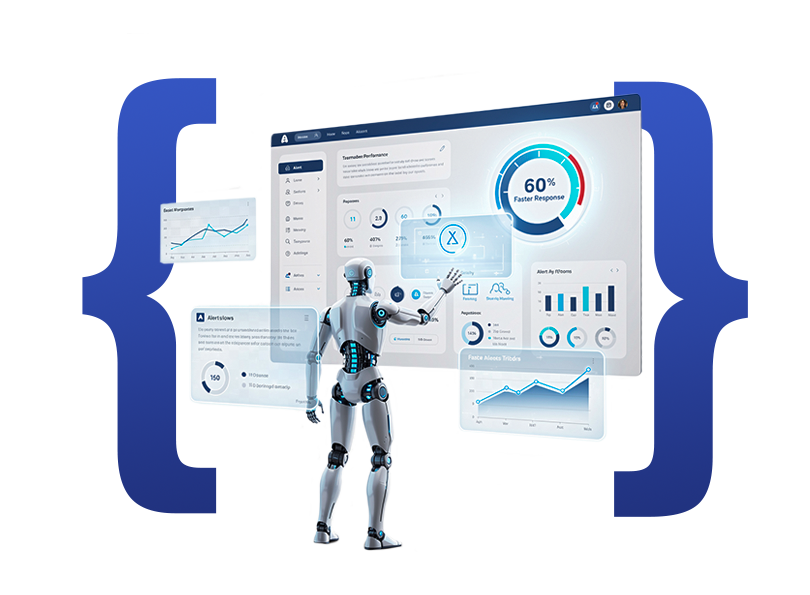
AI driven alerting changes this equation entirely delivering intelligence at machine speed and cutting response time by up to 60 percent.
Key points
This is not an incremental improvement. It is a leadership level shift in how governments, enterprises, and emergency authorities prepare, respond, and recover.
The Challenge with Traditional Disaster Alerting
Most legacy disaster management systems operate reactively. Alerts are triggered after thresholds are crossed. Data arrives from siloed sources. Human teams must interpret signals, validate risks and decide next steps.
This creates four critical gaps:
- Delayed detection of early warning signals
- Over alerting or under alerting due to static rules
- Slow coordination across agencies
- Limited situational awareness during evolving crises
During disasters, delay equals damage. Speed is not optional, it is foundational.
How AI Driven Alerting Transforms Response
AI driven alerting systems continuously analyze massive volumes of real time data from satellites, sensors, weather feeds, social signals, and operational systems. Instead of waiting for an event to escalate, AI identifies patterns, anomalies, and risk indicators before impact peaks.
Key capabilities include:
- Predictive Intelligence: Machine learning models anticipate floods, wildfires, earthquakes and infrastructure failures hours or even days earlier by recognizing subtle patterns humans cannot detect.
- Context Aware Alerts: AI prioritizes alerts based on severity, location, population density, and asset criticality. Decision makers receive fewer but far more actionable alerts.
- Automated Escalation: Alerts are routed instantly to the right teams agencies and systems without manual intervention, reducing coordination delays.
- Real Time Decision Support: AI dashboards provide live impact forecasts, evacuation routes, resource allocation insights and response simulations as conditions change.
Together these capabilities dramatically compress the detect, decide, and act cycle.
The 60 Percent Reduction Explained
First responders and government agencies leveraging AI driven alerting consistently achieve response time reductions of up to 60 percent due to:
- Faster event detection through continuous monitoring
- Elimination of manual triage and validation steps
- Instant multi-channel communication to responders and citizens
- Data driven prioritization instead of guesswork
Real World Impact Across Disaster Scenarios
- Natural Disasters: AI anticipates flood paths, wildfire spread, and cyclone intensity enabling earlier evacuations and smarter resource staging.
- Urban Infrastructure Failures: Power grid breakdowns, dam stress, and transportation disruptions are detected early preventing cascading failures.
- Public Safety Emergencies: Crowd movements and abnormal activity patterns trigger preventive alerts before incidents escalate.
- Industrial and Environmental Accidents: Chemical leaks and pollution events are identified and contained faster minimizing long term damage.
Leadership Advantage in Crisis Management
AI driven alerting is not just a technology upgrade. It is a leadership statement.
Leaders who adopt intelligent alerting systems demonstrate
- Preparedness over reaction
- Data driven governance
- Commitment to citizen safety and resilience
- Operational excellence under pressure
In a world of climate volatility and urban density resilient leadership is defined by anticipation not response.
Trust and Compliance Built In
Modern AI alerting platforms are designed with explainability audit trails and regulatory compliance at the core. Decision makers can understand why an alert was triggered, what data was used and how recommendations were generated.
This builds trust across stakeholders while meeting governance and compliance standards.
The Future of Disaster Management is Predictive
Disasters will continue to grow in frequency and complexity. Manual systems cannot scale to this reality. AI driven alerting offers a proven path forward combining speed, intelligence, and coordination at unprecedented levels.
The question is no longer whether AI should be part of disaster management. The question is how soon leaders are willing to act.
Those who invest now will not only reduce response time by 60 percent. They will redefine what resilience looks like in the digital age.