



Overview
The 2004 tsunami remains one of India’s starkest reminders of how fragile traditional systems can be when information arrives slowly, but disasters move rapidly. Relief teams worked with courage, yet the absence of real-time insights led to delays, misallocation of resources, and widespread confusion.
Key points
A Wake-Up Call We Still Haven’t Fully Addressed
The 2004 tsunami remains one of India’s starkest reminders of how fragile traditional systems can be when information arrives slowly, but disasters move rapidly. Relief teams worked with courage, yet the absence of real-time insights led to delays, misallocation of resources, and widespread confusion.
Since then, India has built strong institutions and protocols. But the world has changed faster than these systems were designed to. Climate volatility, interconnected supply chains, urban density, and the volume of digital information have created a crisis landscape that moves at unprecedented speed.
For executives responsible for corporate offices, critical infrastructure, or entire communities, the cost of inaction cannot be overstated. When response teams operate with limited or outdated information, the consequences aren’t just inconvenient, they can be devastating. Each delay in decision-making risks not only property but the safety and trust of the people who depend on strong leadership.
The uncomfortable truth is this:
The gap between disaster velocity and decision velocity is widening.
Why Scale, Not Skill, Has Become the Limiting Factor
Leaders overseeing disaster response have always worked with dedication. The challenge today is the sheer quantity and fragmentation of data that must be interpreted instantly. Within hours of a major flood or cyclone, agencies are flooded with:
- Satellite imagery
- Social media alerts
- Sensor data from dams and rivers
- Rainfall and tide predictions
- Traffic and mobility patterns
- Hospital and resource availability
Even the best-trained teams cannot manually synthesize all this in real time. By the time yesterday’s images were reviewed, the situation had already evolved.
This isn’t a process failure. It’s a speed mismatch.
The Shift from Reaction to Foresight
Traditionally, response systems activate only after an event unfolds. But AI now enables scenario prediction with remarkable accuracy. Instead of a general seasonal advisory, leaders can receive precise, localized forecasts such as:
- Likely breach points
- Expected power failures
- Probable road closures
- Population segments most at risk
This is the step change that moves organizations from reactive to anticipatory.
Where AI Steps In: The Intelligence Layer We Never Had
Smart executives know that adopting AI is more than a technical upgrade. It’s a sign of readiness, a commitment to staying ahead of the next monsoon, flood, or unforeseen crisis. Those who move early aren’t just responding, they’re future proofing their organizations against the chaos that’s increasingly common in urban India.
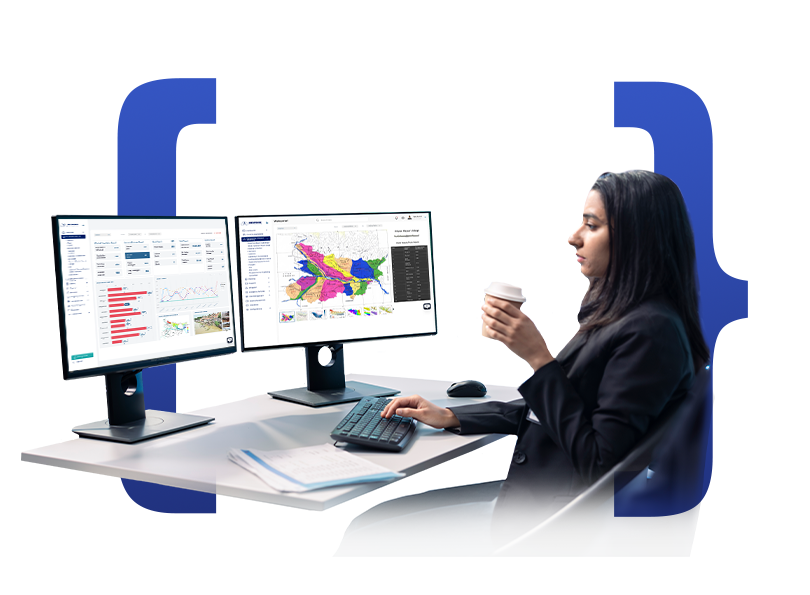
Emerging platforms like iResponse do not replace responders, they enhance their capabilities. They function as a unified intelligence layer, connecting the dots across fragmented datasets, recognizing early patterns, and delivering real-time insights.
With artificial intelligence, the way we manage disasters is rapidly evolving. Platforms like iResponse bring together streams of real-time data from satellite images, weather alerts, reports from Mumbai’s citizens on the ground creating a single source of clarity. These AI-powered insights help leaders prioritize, forecast where the biggest risks are, and get ahead of the worst outcomes before they happen.
In a world where disasters behave like fast-moving networks, iResponse acts as the nervous system that senses, interprets, and guides action.
Part 1 concludes with a simple truth:
- Leaders are no longer fighting the disaster alone. They’re fighting time.
- AI is the only tool that can match that speed.