



Overview
Large gatherings are no longer simple assemblies. They are dynamic ecosystems, constantly shifting, highly unpredictable, and deeply dependent on real-time awareness. Whether it’s a global sports tournament, a political rally, a music festival, or a religious congregation, leaders today face a pressing question:
Key points
How do we ensure safety, enable smooth movement, and respond instantly when something goes wrong?
Facial recognition, long perceived as futuristic, has quietly become one of the most strategic tools for event intelligence. When implemented responsibly, it transforms how authorities, organizers, and security teams understand crowd behavior and act during critical moments.
This isn’t about surveillance for control. It’s about visibility for protection, analytics for decision-making, and technology for safer experiences.
Rethinking Crowd Monitoring: From Reactive Supervision to Proactive Intelligence
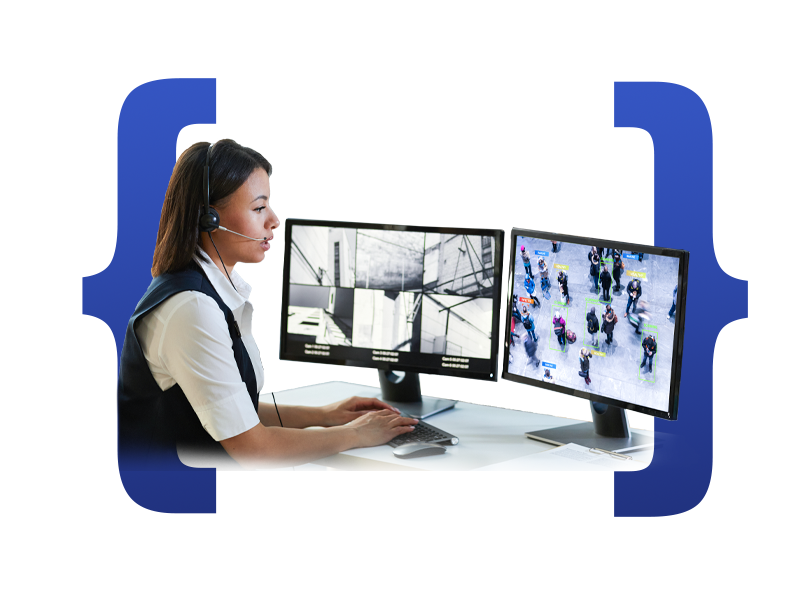
Traditional CCTV networks offer visibility, but not clarity. Human operators can monitor only a limited number of screens, often leading to delayed responses or missed early warnings. Facial recognition changes this paradigm completely.
Its core value lies in its ability to convert raw crowd video into real-time insights. Instead of reacting to incidents, authorities can now anticipate them.
With facial recognition, teams can answer critical questions instantly:
Where is the crowd density rising? Who is entering restricted zones? Are there unusual movement patterns? Has someone in distress been identified?
This shift – from watching to understanding – is what makes it transformational.
Keyways Facial Recognition Enhances Crowd Movement Monitoring
Smarter Crowd Flow Analysis:
Facial recognition can track aggregated movement patterns without identifying individuals unnecessarily. This helps authorities monitor:
- Where people are clustering
- Which exits are under pressure
- How footfall evolves across time and zones
Instead of waiting for congestion to escalate, teams gain the foresight to reroute visitors or open alternative pathways before a problem arises.
Rapid Identification During Emergencies:
In moments of panic, stampedes, fire hazards, unexpected chaos, a few seconds decide outcomes. Facial recognition helps locate vulnerable individuals, lost persons, or those in distress in real time. It also supports rapid evacuation by guiding responders to the exact zones where movement has stalled.
Enhancing Security Without Slowing Entry:
Event security checks often create long queues. Facial recognition enables frictionless and verified entry for pre-registered attendees, VIPs, staff, and volunteers. Faster entry equals smoother crowd movement and reduced choke points—a major contributor to event safety issues.
Monitoring High-Risk Zones and Anomalies:
Restricted areas, backstage corridors, and control rooms need constant vigilance. Facial recognition can detect unauthorized access attempts in real-time, enabling teams to intervene before vulnerabilities escalate.
This continuous situational awareness strengthens security while minimizing manpower overload.
Supporting Lawful and Ethical Safety Operations:
Modern systems are designed with privacy and governance safeguards. Facial recognition can operate in compliance with data minimization standards, using temporary identifiers and anonymous movement profiles that support safety without invading personal space.
When deployed responsibly, it proves that security and privacy are not competing priorities, they can coexist.
The Strategic Advantage for Leaders:
For leaders overseeing high-profile events, the question is no longer “Should we adopt advanced crowd monitoring?” but “How can we deploy it responsibly and effectively?”
Facial recognition empowers decision-makers to:
- Strengthen public safety with precision analytics
- Reduce operational blind spots
- Lower emergency response times
- Improve crowd experience and flow
- Build trust through transparent, purpose-driven technology use
Events that embrace such intelligent tools signal preparedness, competence, and future-readiness.
Responsible Innovation: The Pathway Forward:
A thoughtful approach to facial recognition is essential. That includes:
- Clearly defined use-cases
- Strict access control and data governance
- Limited data retention policies
- Public communication on safety objectives
- Vendor partnerships that prioritize ethical AI
This ensures that technology is applied not for surveillance, but for public good, operational excellence, and collective safety.
The Future of Safe Events Is Insight-Driven:
As global gatherings grow in scale and complexity, leaders need more than cameras. They need intelligence. They need systems that transform images into awareness, and awareness into action.
Facial recognition when applied correctly becomes a strategic ally in managing crowd movement, preventing incidents, and ensuring that every attendee feels protected.
The future belongs to events that can think, respond, and adapt in real time.
Facial recognition is helping build that future today.